The Expat's Medicine Ledger: What Americans Living in Istanbul Wish They Had Written Down in Year One

The Expat's Medicine Ledger: What Americans Living in Istanbul Wish They Had Written Down in Year One
Ask any American who has lived in Istanbul for three or more years what they would do differently in their first twelve months, and a surprisingly consistent answer emerges: they would have kept better records. Not travel journals. Not restaurant lists. Medication records—systematic, annotated, and specific enough to be useful to a Turkish pharmacist at two in the morning.
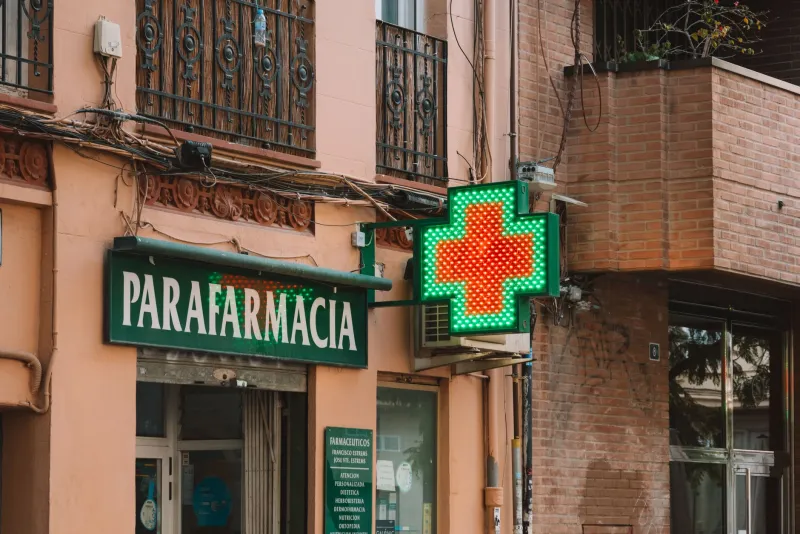
This publication spoke with more than fifty long-term American residents across Istanbul's neighborhoods, from Kadıköy to Beşiktaş to Fatih, about the practical knowledge failures they experienced during year one. What emerged was less a story about pharmacy access—Istanbul's rotating duty system, or nöbetçi eczane network, is genuinely robust—and more a story about personal documentation. The city's pharmacists are available. The problem, expat after expat explained, is that the patients often are not prepared to communicate what they actually need.
The Naming Gap Nobody Warned Them About
The most frequently cited frustration was deceptively simple: American brand names mean almost nothing in a Turkish pharmacy.
A retired teacher from Ohio who has lived in Moda for six years described standing at a duty pharmacy counter holding an empty pill bottle with a name she had taken for granted for a decade. The pharmacist—competent, patient, and genuinely trying to help—could not locate the medication under that name because Turkey's pharmaceutical market uses International Nonproprietary Names (INN) as the default, alongside Turkish-specific brand names that bear no resemblance to their American counterparts.
"I had no idea what the active ingredient was," she said. "I had been taking it for so long I stopped reading the label. That was a humbling night."
The fix, she and many others discovered, is straightforward but requires advance effort: for every medication you take regularly, record both the American brand name and the generic (INN) name. Then, before you move or travel, have a Turkish pharmacist or a bilingual healthcare contact help you identify the Turkish market equivalent. Write that down too.
Dosage Conversions Are Not Universal
A second gap that surprised many expats involves dosage formulations. Several interviewees discovered that a medication available in a specific milligram strength in the United States is manufactured at a different standard strength in Turkey. This is not a safety crisis—pharmacists are trained to guide patients through equivalent dosing—but it creates confusion for anyone who arrives assuming their usual "two tablets twice a day" instruction translates directly.
A software engineer from Seattle who relocated to Levent described a scenario that initially alarmed him. His blood pressure medication, available in 25mg tablets in the US, was stocked in Turkey at 12.5mg. His Turkish physician eventually clarified the equivalence, but for several weeks he had simply been taking the wrong number of tablets because no one had flagged the discrepancy.
"I had a prescription," he said, "but it was written in American dosage assumptions. The pharmacy filled it correctly by Turkish standards, and those two things didn't match."
The documentation practice he now recommends: record not just the drug name and dose, but the precise tablet or capsule strength you were prescribed in the US, and explicitly ask a Turkish healthcare provider to verify the local equivalent before you begin filling prescriptions here.
What a Personal Medication Ledger Should Actually Contain
Based on the collective experience of the expats interviewed, a functional medication reference system—what several of them now call a "medicine ledger"—should include the following elements:
American brand name and generic (INN) name — both, without exception. The INN is your universal key.
Turkish brand name equivalent — verified by a pharmacist or physician in Turkey, not assumed from an internet search.
Dosage strength in the US formulation — the exact milligram or microgram amount per unit, not just the prescribed dose.
Turkish dosage equivalent — confirmed locally, particularly for medications where strengths differ between markets.
Prescription status in Turkey — several medications sold over the counter in the US require a prescription here, and the reverse is also true. Knowing this in advance prevents wasted trips.
Storage requirements — relevant for medications requiring refrigeration or protection from humidity, both of which Istanbul's climate can challenge.
Allergy and interaction notes in Turkish — even a single typed sentence stating known allergies, translated into Turkish, can prevent a serious error during a stressful late-night pharmacy visit.
The Allergy Card Problem
Of all the documentation failures described, allergy communication generated the most serious anecdotes. Turkish pharmacists are thorough and careful, but verbal communication of a complex allergy profile—under stress, possibly in a second language—is an unreliable method.
A retired nurse from Chicago who now lives in Üsküdar was unequivocal: "In thirty years of American healthcare, I told every provider about my penicillin allergy. I assumed I would just keep doing that. What I didn't account for was that I'd be doing it in Turkish, at eleven at night, with a migraine."
She now carries a laminated card—separate from her general emergency information—that lists her allergies in Turkish, the drug classes involved, and the reaction type. She had it reviewed by her Turkish family physician and by the pharmacist at her neighborhood eczane before she finalized the wording.
When the System Works—and When Documentation Makes It Work Better
It is worth stating clearly: Istanbul's duty pharmacy infrastructure is genuinely well-organized. The nöbetçi eczane rotation ensures that at least one pharmacy in every district is staffed and stocked around the clock. Turkish pharmacists are licensed clinical professionals who routinely handle consultations that, in the American system, would require a physician visit.
The expats interviewed were not criticizing the system. They were, uniformly, describing how their own lack of preparation had created friction inside a system that was otherwise functioning correctly. The duty pharmacist at 3 AM is ready to help. The question is whether you have given her enough accurate information to do so.
A graphic designer from Austin who has spent four years in Cihangir summarized it precisely: "The pharmacist knew her job. I just hadn't done mine yet."
Building the Ledger Before You Need It
The consensus recommendation from long-term residents is to build a personal medication ledger before any urgent need arises—ideally within the first month of arrival, and certainly before the first winter cold season or summer travel period.
The most effective approach, multiple expats noted, involves a brief consultation at your local neighborhood pharmacy during a calm, non-emergency visit. Bring your medication list, ask the pharmacist to help you identify Turkish equivalents, and record everything in writing. Most Istanbul pharmacists, even those with limited English, are accustomed to this kind of reference-building conversation and approach it professionally.
Digital storage—a notes app, a secure document in cloud storage—ensures the ledger is accessible even if a wallet or bag is lost. Several expats keep a printed copy at home and a photographed version on their phone.
Year one in Istanbul involves a great deal of productive disorientation. The city rewards the organized. Your medication history, translated and recorded with Turkish-specific accuracy, is among the most useful documents you can carry—and among the easiest to build while everything is calm, before you ever find yourself at a nöbetçi eczane counter, exhausted and uncertain, wishing you had written it all down.