Istanbul's Invisible Safety Net: How the Nöbetçi Eczane System Functions as a Shadow Emergency Network
Istanbul's Invisible Safety Net: How the Nöbetçi Eczane System Functions as a Shadow Emergency Network
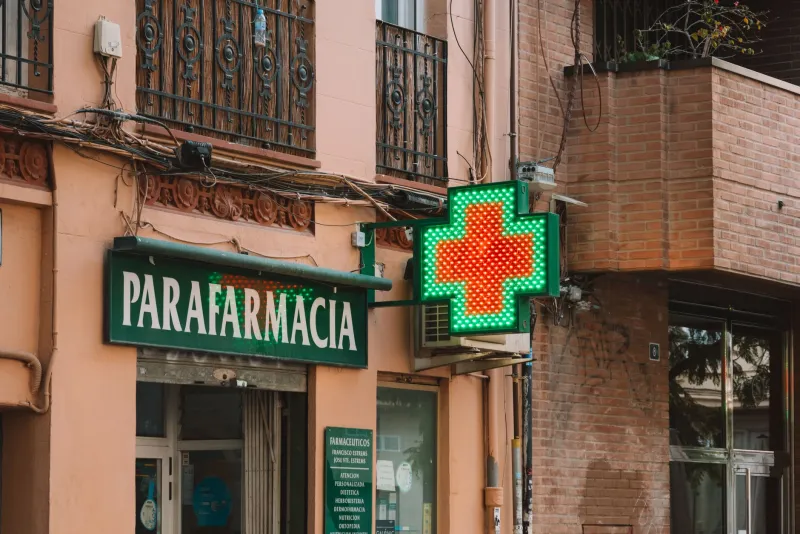
On a Tuesday night in the Kadıköy district, a woman in her late thirties notices her toddler has spiked a fever of 39.5°C—roughly 103°F in the measurement system most Americans instinctively reach for. It is 2:17 in the morning. Her pediatrician's office is closed. The nearest hospital emergency room, she knows from experience, will mean a two-hour wait in a fluorescent-lit corridor surrounded by far more serious cases. Instead, she walks four minutes to the nearest nöbetçi eczane, the green cross above the door still glowing, and is back home with the correct pediatric suspension within fifteen minutes.
This scenario, entirely unremarkable to Istanbul residents, would be nearly impossible to replicate in most American cities. And that gap—between the mundane and the miraculous, depending on which side of the Atlantic you're standing on—is precisely what makes the nöbetçi eczane system worth examining with genuine seriousness.
What the System Actually Is
The term nöbetçi eczane translates literally to "duty pharmacy" or "on-call pharmacy." By Turkish law, every licensed pharmacy in Istanbul is required to participate in a rotating duty schedule, ensuring that at any given hour—day or night, weekday or holiday—a legally designated pharmacy in each district remains open and fully operational. The schedule is coordinated by provincial pharmacy chambers, publicly posted, and increasingly accessible through digital platforms and municipal apps.
This is not an ad hoc arrangement. It is a mandated, structured rotation embedded in Turkey's pharmaceutical regulations, meaning the system does not depend on individual pharmacy owners deciding it is commercially worthwhile to staff a midnight shift. Participation is obligatory. The coverage is, by design, comprehensive.
For American travelers and expats, the contrast with home is immediate and disorienting in the best possible way. In the United States, after-hours pharmaceutical access is largely a function of market forces: 24-hour pharmacies exist where population density and commercial viability make them profitable. In many suburban and rural areas, that calculation simply does not produce a result. The nöbetçi system, by contrast, treats after-hours access as a public health obligation rather than a retail opportunity.
The Pharmacist as Clinical Gatekeeper
What distinguishes Istanbul's duty pharmacists from their American counterparts is not merely availability—it is the scope of the role they are culturally and professionally expected to fill.
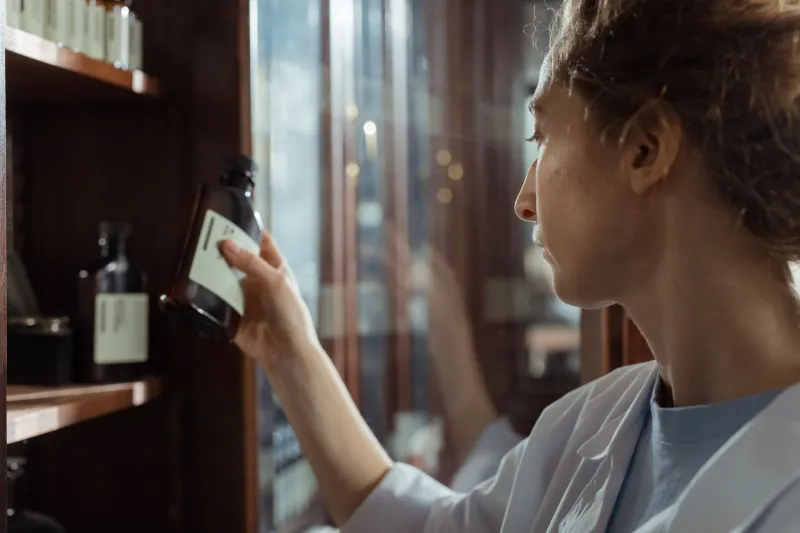
Turkish pharmacists undergo a rigorous five-year university education followed by practical training, and the profession carries significant clinical authority in the public's perception. When someone arrives at a nöbetçi eczane at midnight with a child running a high fever, a rash they cannot identify, or symptoms that might indicate an allergic reaction, the pharmacist is expected to conduct a substantive assessment: asking targeted questions, evaluating symptom severity, recommending an appropriate over-the-counter intervention, or—critically—making the call that this particular situation requires hospital-level care.
That last function is underappreciated. Duty pharmacists in Istanbul effectively act as triage filters, absorbing cases that are genuinely manageable at the pharmaceutical level and redirecting only those that are not. The result is a measurable reduction in unnecessary emergency room visits—a pressure valve on a system that would otherwise be flooded by the same low-acuity cases that consume enormous resources in American ERs every night.
"Most of what comes to us after midnight is frightening to the person experiencing it but entirely addressable with the right medication and the right guidance," one Istanbul pharmacist with over two decades of duty rotations explained. "A parent whose child has a fever at 3 AM does not need an emergency room. They need someone who can assess the situation calmly and give them what will actually help. That is what we are here for."
What American Expats Discover
For Americans living in Istanbul—a community that has grown steadily over the past decade—the nöbetçi system tends to produce a specific kind of revelation: the moment they realize they have been conditioned to accept inadequate access as normal.
One American expat who relocated to the Beşiktaş neighborhood described her first encounter with a duty pharmacy as "genuinely surreal." She had developed a severe allergic reaction to a food ingredient late on a Friday evening—a scenario that, back in her home state of Ohio, would have sent her to an urgent care facility at minimum, likely an ER. In Istanbul, she walked to the nearest nöbetçi eczane, described her symptoms, and was assessed and supplied with an appropriate antihistamine within minutes. "The pharmacist knew exactly what I needed," she recalled. "There was no waiting room, no intake form, no $300 bill. Just a knowledgeable person who helped me."
This pattern repeats across the expat community with striking consistency. The system's value becomes most visible not during routine moments but during the specific category of medical event that falls between "I can wait until morning" and "I genuinely need an ambulance"—the vast middle ground where most nighttime health crises actually live.
The Public Health Architecture Behind the Convenience
It would be a mistake to frame the nöbetçi eczane system purely as a consumer convenience. Its structural significance is considerably deeper than that.
Public health researchers have long documented the relationship between after-hours pharmaceutical access and emergency room overcrowding. When people cannot obtain necessary medications outside of standard business hours, a meaningful proportion of them default to emergency services—not because their conditions warrant it, but because no alternative exists. This dynamic is well-documented in the American context, where ER visits for conditions that could be managed with an over-the-counter medication represent a substantial and costly inefficiency.
Istanbul's rotating duty system addresses this structural gap directly. By guaranteeing pharmaceutical access at all hours across every district of a city of 15 million people, the system creates an alternative pathway that keeps manageable cases out of emergency departments. The pharmacist becomes, in effect, the first point of clinical contact—a role that requires both the professional competence to perform it responsibly and the institutional framework to make it available.
That institutional framework is the element most conspicuously absent from American pharmaceutical policy. The United States has no federal mandate requiring after-hours pharmacy coverage. Individual states have varying regulations, but none approaches the systematic, district-level rotation that Turkish law requires. The result is a patchwork of access that reflects commercial geography rather than public health need.
What the System Reveals About Healthcare Philosophy
At its core, the nöbetçi eczane system embeds a particular assumption into Turkish healthcare infrastructure: that access to pharmaceutical guidance is a baseline public necessity, not a premium service. This philosophical orientation produces a system that functions reliably precisely because it does not depend on profitability to operate.
For Americans—whether traveling through Istanbul, living here long-term, or simply following developments in global health policy—the nöbetçi system offers something more valuable than a convenient place to find medication at midnight. It offers a working model of what pharmaceutical access looks like when it is treated as infrastructure rather than industry.
The green cross glowing above a duty pharmacy at 3 AM is not merely a commercial sign. In Istanbul, it is a public health guarantee—quiet, reliable, and quietly extraordinary to anyone who has ever spent a sleepless night searching for an open pharmacy in an American city and found nothing but darkness.