Same Pill, Wildly Different Price Tag: An American's Cost Comparison at Istanbul's Duty Pharmacies
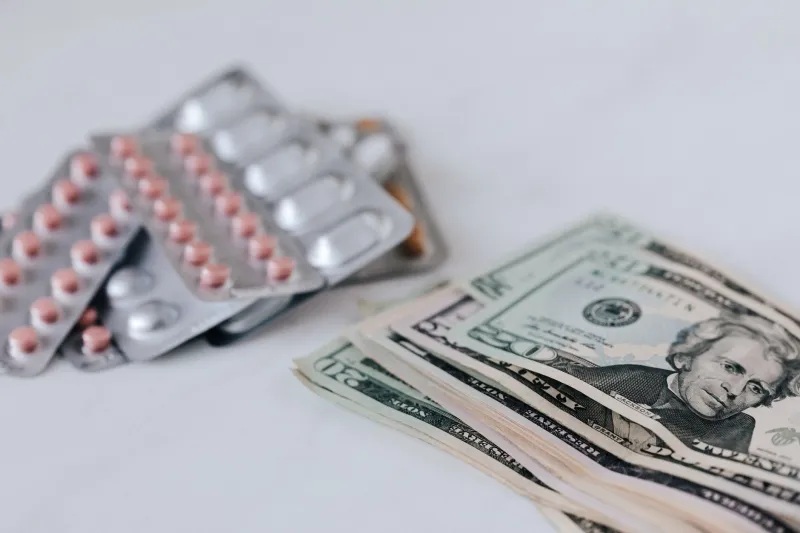
Same Pill, Wildly Different Price Tag: An American's Cost Comparison at Istanbul's Duty Pharmacies
There is a particular kind of sticker shock that Americans experience abroad. It is not the kind that comes from luxury goods or fine dining—it is the quiet, almost embarrassing surprise of paying three dollars for a medication that would have cost forty back home. For travelers passing through Istanbul's duty pharmacy network, this moment arrives quickly, often at a counter lit by fluorescent lights sometime after midnight.
This article does not aim to sensationalize. Rather, it offers a structured, factual comparison of what Americans typically pay—with and without insurance—for a selection of common medications, versus what those same drugs or their direct equivalents cost at a nöbetçi eczane in Istanbul. The figures are drawn from publicly available U.S. pricing data and general retail benchmarks for Turkish pharmacies. Individual prices will vary by brand, dosage, and district.
The Numbers, Side by Side
Ibuprofen (400mg, 20 tablets)
In the United States, a store-brand box of ibuprofen typically retails between $8 and $14 depending on the retailer. With insurance, the cost may drop slightly if purchased as a prescription-strength version, though most Americans buy it over the counter at full price. At an Istanbul duty pharmacy, a comparable Turkish-manufactured ibuprofen product—often sold under the brand name Brufen or a generic equivalent—costs roughly 40 to 80 Turkish lira, which at current exchange rates translates to approximately $1.25 to $2.50.
Loratadine or Cetirizine (Antihistamines, 10mg, 10–14 tablets)
A two-week supply of cetirizine at a U.S. chain pharmacy runs between $10 and $20 without insurance. Generic versions have brought prices down somewhat, but branded products remain significantly higher. In Istanbul, antihistamines such as Aerius (desloratadine) or Zyrtec equivalents are priced between 60 and 120 lira—roughly $2 to $4 for a comparable course.
Amoxicillin (500mg, 14 capsules)
This is where the comparison becomes particularly striking. In the United States, amoxicillin requires a prescription, and even with insurance, a standard course can cost between $15 and $45 depending on the pharmacy and plan. Without insurance, prices at major chains frequently exceed $30. In Turkey, amoxicillin also requires a prescription, but the retail price for an equivalent course hovers between 150 and 250 lira—approximately $4.50 to $7.50. The prescription requirement applies equally in both countries; what differs is the underlying cost structure.
Fluconazole (Antifungal, 150mg, single capsule)
A single-dose fluconazole tablet retails in the U.S. for $15 to $25 over the counter, and branded versions can exceed $30. In Istanbul, the equivalent product—sold under names such as Flucoral or Diflucan—costs between 80 and 150 lira, or roughly $2.50 to $4.50.
Omeprazole (Proton Pump Inhibitor, 20mg, 14 capsules)
Over-the-counter omeprazole in the U.S. typically costs between $18 and $28 for a two-week supply. In Istanbul, the same duration of treatment with a Turkish generic runs approximately 100 to 180 lira, or $3 to $5.50.
Why the Gap Exists
The price differential between American and Turkish pharmaceutical retail is not accidental. It reflects fundamentally different policy choices about who bears the cost of drug access.
In the United States, pharmaceutical pricing operates within a largely market-driven framework. Manufacturers set prices based on patent protections, research cost recovery models, and negotiated agreements with pharmacy benefit managers. The result is a system in which the same molecule can carry vastly different price tags depending on insurance status, pharmacy chain, and geography. Uninsured Americans—and insured Americans whose medications fall outside formulary coverage—frequently pay prices that bear little relationship to the actual cost of production.
Turkey's pharmaceutical sector operates under a reference pricing system administered by the Ministry of Health. Drug prices are benchmarked against a basket of European countries, then adjusted for the Turkish market. This regulatory framework compresses retail prices significantly. Turkish pharmacists, including those staffing nöbetçi eczaneler during overnight hours, dispense medications at government-approved prices. There is no equivalent of the U.S. pharmacy benefit manager negotiating behind the scenes—or, more precisely, there is a government body performing a similar function, but with the explicit mandate of maintaining affordability.
What This Means for American Travelers in Practice
For a U.S. traveler who develops a sinus infection, a skin reaction, or a gastrointestinal complaint while in Istanbul, the cost implications are immediate and practical. Seeking treatment through a Turkish duty pharmacy—for medications that are legally available over the counter in Turkey—can represent substantial savings compared to either purchasing the same drug at a U.S. airport pharmacy before departure or paying out-of-pocket upon return.
Several practical points deserve emphasis, however.
First, prescription requirements differ between countries. Certain antibiotics and other regulated medications that require a doctor's visit in the United States also require a prescription in Turkey. A nöbetçi eczane pharmacist will not dispense these without documentation. The cost advantage for prescription drugs exists, but accessing it still requires a legitimate clinical encounter.
Second, travelers who wish to carry medications purchased in Istanbul back to the United States should be aware of U.S. Customs regulations. Personal-use quantities of medications purchased abroad are generally permitted for re-entry, but travelers are advised to retain original packaging and receipts. Controlled substances are subject to entirely separate rules and are not addressed here.
Third, brand names differ. An American asking for "Zyrtec" at an Istanbul pharmacy may receive a blank look. Knowing the generic name—cetirizine, in this case—is more useful than knowing the U.S. brand. Most duty pharmacists working in high-tourist districts are accustomed to assisting foreign visitors, but having generic names written down in advance removes ambiguity.
A Reflection on What These Numbers Reveal
The price comparison outlined above is, on one level, a practical travel resource. On another level, it is a commentary on pharmaceutical policy. When a traveler can purchase a course of antibiotics in Istanbul for less than the cost of a single cocktail in a Beyoğlu bar, while the same course costs a fellow citizen without insurance three to four times as much at a pharmacy in Chicago, the disparity invites scrutiny.
This is not to suggest that Istanbul's pharmacy system is without limitations. Availability of certain specialty medications, language barriers for non-Turkish speakers, and the rotating nature of the nöbetçi system all introduce friction that a well-stocked American pharmacy with extended hours does not. The comparison is not a wholesale endorsement of one system over another.
What it does offer is a useful data point: pharmaceutical access is a policy outcome, not a natural law. The prices Americans pay are the result of choices—legislative, regulatory, and commercial—that other countries have made differently. Istanbul's duty pharmacies, open through the night and priced according to a government-supervised framework, represent one such different set of choices.
For the American traveler standing at a nöbetçi eczane counter at two in the morning, counting out lira coins for a medication that would have cost them forty dollars at home, that distinction is not abstract. It is, in the most literal sense, felt in the wallet.