Scope Without Borders: The Diagnostic Capabilities of Istanbul's Duty Pharmacists That Would Require a Copay in America

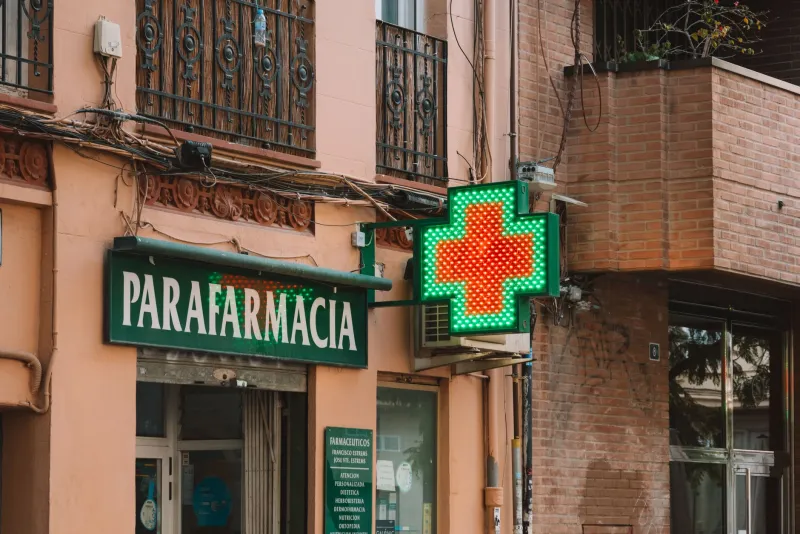
Walk into a nöbetçi eczane in Kadıköy at midnight with a swollen ankle, a rash spreading across your forearm, or a child running a fever, and something unexpected will happen. The pharmacist behind the counter will ask you detailed questions. They will examine the affected area under good lighting. They will form an opinion—and then they will share it with you, plainly and without hesitation.
Do the same thing at a 24-hour Walgreens in Chicago, and the pharmacist will likely hand you a box of ibuprofen and suggest you see a doctor.
This is not a criticism of American pharmacists. It is a structural observation about two entirely different healthcare philosophies—and for the hundreds of thousands of Americans who visit or reside in Istanbul each year, understanding that difference could save significant time, money, and anxiety.
The Regulatory Architecture Behind the Difference
In the United States, pharmacy practice is tightly governed by state licensing boards, and the scope of what a pharmacist may clinically advise is deliberately narrow. American pharmacists are trained to dispense, counsel on drug interactions, and flag contraindications. What they are not empowered to do—and in many states, what they are explicitly prohibited from doing—is offer anything resembling a diagnosis. The liability exposure alone discourages most from venturing into clinical territory.
Turkish pharmacy regulation operates under a different framework. The Turkish Medicines and Medical Devices Agency (TİTCK), along with the Turkish Pharmacists' Association (TEB), trains and licenses pharmacists with an expectation of frontline clinical engagement. Turkish pharmacy education is a five-year university program that includes substantial coursework in clinical pharmacology, pathophysiology, and patient assessment. Graduates emerge not merely as dispensers but as first-contact healthcare providers.
This distinction is not incidental. It is the product of a deliberate policy decision rooted in Turkey's healthcare geography. With millions of residents in Istanbul alone, and with primary care physician access sometimes limited by appointment availability and cost, pharmacists have historically served as the first line of clinical contact. The system was designed with that reality in mind.
What Turkish Duty Pharmacists Actually Do
Several pharmacists working the nöbetçi rotation in Istanbul's busier districts describe their overnight responsibilities in terms that would surprise most Americans.
"A typical night shift might include someone with a suspected ear infection, someone whose child has had diarrhea for two days, a person who has had an allergic reaction to something they ate, and a tourist who has cut themselves and is worried about infection," one duty pharmacist in Beyoğlu explains. "For each of these, I am expected to gather information, assess severity, recommend a course of action, and in some cases provide the treatment directly."
That treatment may include prescription-strength topical antibiotics for wounds, oral rehydration protocols for gastroenteritis, antihistamine regimens for allergic responses, or antifungal preparations for skin conditions. In each case, the pharmacist is not simply retrieving a product from a shelf—they are making a clinical judgment about what the situation warrants.
American expat Sarah M., who has lived in Istanbul's Şişli district for four years, recalls her first encounter with this system vividly. "I had what I was certain was a UTI. Back home, that means a telehealth appointment, a prescription sent to a pharmacy, and forty-eight hours of waiting. Here, I walked into the eczane, described my symptoms, and within ten minutes I had a complete treatment course and instructions. The pharmacist had asked me more thorough questions than some urgent care doctors I've seen in the States."
The Cultural Layer Beneath the Clinical One
Regulation explains the legal permission. Culture explains the execution.
In Turkish society, the eczane occupies a social role that has no direct American equivalent. It is simultaneously a pharmacy, a neighborhood clinic, a trusted advisor, and in some communities, a place where health concerns are discussed with the same openness that Americans might reserve for a family doctor. This social contract means that Turkish pharmacists are expected to engage—not deflect.
For American visitors accustomed to receiving carefully hedged non-answers from pharmacy staff, this directness can feel startling. "The first time a pharmacist here just told me what he thought was wrong and what I should do about it, I actually asked him if he was sure he was allowed to say that," recalls David K., a freelance consultant from Austin who relocated to Istanbul two years ago. "He laughed. He said, 'This is my job.'"
That confidence is not carelessness. Turkish duty pharmacists are well aware of the boundaries of their competence and are trained to recognize when a situation exceeds those boundaries. Referral to a hospital emergency department—known locally as acil servis—is a routine part of their practice when symptoms suggest something beyond their scope.
What American Visitors Should Understand Before They Arrive
The practical implications for Americans in Istanbul are significant, but they come with important caveats.
First, the enhanced scope of Turkish pharmacists does not mean that a nöbetçi eczane is a substitute for emergency medical care. Chest pain, stroke symptoms, severe allergic reactions, and trauma require acil servis. Duty pharmacists in Istanbul are clear about this and will redirect patients accordingly.
Second, the clinical engagement of Turkish pharmacists is most effective when patients provide detailed, accurate information. A vague description of "not feeling well" will produce a less useful response than a specific account of symptoms, their duration, and any relevant medical history. This is a point addressed more fully in other guides on this site, but it bears emphasis here: the pharmacist's diagnostic capability is only as useful as the information they receive.
Third, Americans should resist the impulse to interpret a Turkish pharmacist's directness as overconfidence. The training and regulatory context that underlies that directness is substantial. This is not a pharmacist guessing—it is a healthcare professional operating within a system designed to support their clinical role.
A Different Model, Not a Better One—But Worth Studying
It would be too simple to conclude that the Turkish model is superior and the American one is deficient. Each system reflects the healthcare priorities, liability frameworks, and resource realities of its own context. American pharmacists operate within constraints that exist for reasons, including patient safety considerations that are not trivial.
What the Turkish model does demonstrate, however, is that pharmacists are capable of more than the American system typically asks of them—and that patients benefit when that capability is deployed thoughtfully.
For Americans navigating Istanbul's after-hours healthcare landscape, the nöbetçi eczane represents a resource whose depth is easily underestimated. Understanding what duty pharmacists here are trained and empowered to do is the first step toward using that resource wisely.