Stock, Substitution, and the Second Pharmacy: How Istanbul's Medication Supply Network Actually Works for Americans
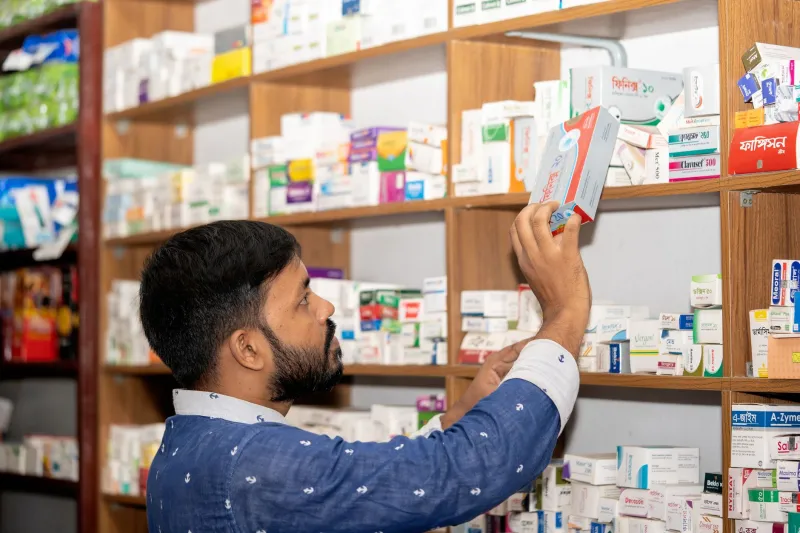
Anyone who has spent enough time in Istanbul has a version of this story: you walk into the nearest nöbetçi eczane at an inconvenient hour, name the medication you need, and are told it is not available. You try the next duty pharmacy. Also unavailable. On the third attempt, or perhaps the fourth, you find it—or you find something close enough that the pharmacist recommends it as a functional substitute.
This experience is common enough among long-term American expats in Istanbul that many have developed what one resident of Cihangir describes as a "second pharmacy habit"—the practice of never assuming the first stop will be the only stop, and structuring their pharmaceutical errands accordingly. Understanding why this happens, and how to navigate it efficiently, is less about managing inconvenience and more about understanding how Turkey's pharmaceutical supply chain actually functions.
Why Stock Varies Across Istanbul's Duty Pharmacies
Turkey's pharmaceutical distribution system operates through a network of regional wholesalers who supply individual pharmacies on regular delivery schedules. Unlike large American pharmacy chains, which can draw on centralized inventory systems and overnight logistics to restock any location within 24 hours, Turkish eczanes are predominantly independent businesses that order inventory based on their own demand forecasts and wholesaler relationships.
This means that a medication's availability at any given pharmacy on any given night reflects a combination of factors: recent local demand, the pharmacy's ordering cycle, the wholesaler's current stock levels, and—importantly—whether the manufacturer is experiencing any supply disruption. Turkey imports a significant portion of its pharmaceutical active ingredients, and global supply chain fluctuations affect availability in Istanbul just as they do in Chicago or Phoenix, sometimes with less buffer inventory to absorb the shock.
The result is a patchwork. Two nöbetçi eczane locations separated by fifteen minutes of travel may have meaningfully different inventory on the same evening, not because one is better-supplied than the other in any systematic sense, but simply because their ordering patterns and recent customer demand happened to diverge.
The Generic Substitution Landscape
For Americans, one of the more disorienting aspects of navigating Turkish pharmacy stock is the prevalence of generic substitution—and the degree to which it is normalized in the system.
In the United States, generic substitution at the pharmacy counter is common but bounded by state law and, in many cases, physician preference markings on prescriptions. In Turkey, pharmacists have somewhat broader latitude to suggest or dispense generic equivalents, and the range of generics available for any given active ingredient is often wider. A medication you know by its brand name in the US may be stocked under two or three different Turkish brand names representing different generic manufacturers, with the brand-name original potentially unavailable or significantly more expensive.
For Americans with a specific medication in mind, this creates a vocabulary problem layered on top of a supply problem. The pharmacist may have exactly what you need—but in a form you do not recognize. Knowing the active ingredient name (the generic or INN name, rather than the brand name) is therefore not simply useful but essential. A pharmacist who cannot locate "Zofran" may immediately recognize "ondansetron" and produce three equivalent options.
What Experienced Expats Actually Do
Americans who have lived in Istanbul for multiple years tend to develop a set of practical habits around pharmacy access that differ substantially from what they did back home.
The most consistent pattern is maintaining a list of medications by active ingredient rather than brand name. This list, kept on a phone or printed and folded into a wallet, becomes the working reference for any pharmacy interaction. Several long-term residents describe updating this list whenever they successfully locate a Turkish equivalent, essentially building a personal translation guide over time.
A second common practice is identifying two or three reliable pharmacies—not necessarily the nearest nöbetçi eczane, but ones that have historically stocked the specific medications they need regularly. Pharmacists at these locations often come to recognize regular customers and, in some cases, will informally hold stock or alert customers when a medication they frequently request comes back into supply.
A third strategy, particularly relevant for ongoing prescriptions, is the practice of purchasing a slightly larger quantity than immediately needed whenever a medication is available. The Turkish pharmaceutical system does not penalize this in the way that American insurance structures sometimes do, and it provides a practical buffer against the next stock gap.
The 48-Hour Window and Why It Matters
The phrase "48-hour rule" circulates in Istanbul's American expat community as shorthand for a specific insight: if you need a medication urgently tonight and cannot find it, you will almost certainly be able to find it within 48 hours if you are willing to contact multiple pharmacies or wait for a restock.
This is both reassuring and, for medications with no acceptable substitute, genuinely stressful. The practical implication is that for chronic or maintenance medications, running out is a more serious problem in Istanbul than it would be in a US city with 24-hour chain pharmacies drawing on national inventory. The buffer you build—whether through the slightly-larger-purchase strategy, through early refill habits, or through maintaining a small travel supply of critical medications—is the difference between an inconvenience and a medical problem.
For acute needs, the calculus is different. Istanbul's pharmacists are generally skilled at identifying therapeutically equivalent alternatives for common acute presentations, and the city's network is large enough that persistent searching—aided by calling ahead to check stock before traveling—usually produces a solution.
Calling Ahead: The Most Underused Tool
Perhaps the single most practical piece of advice that emerges from conversations with long-term American residents is also the simplest: call before you go. Istanbul's nöbetçi eczane listings—including those available through this site—include phone numbers, and a brief call to confirm that a specific medication is in stock before making a late-night journey across a neighborhood is a habit that eliminates the majority of multi-pharmacy frustration.
For Americans who are uncertain about their Turkish language skills, the phrase "[medication name] var mı?"—meaning "do you have [medication name]?"—is understood at every pharmacy in the city and requires no further elaboration to get a yes or no answer. It is a small investment in preparation that regularly saves significant time.