Caught Before It Cascades: How Istanbul's Rotating Pharmacy Model Stops Minor Ailments From Becoming Medical Crises

There is a particular kind of medical emergency that should never happen. Not the sudden cardiac event or the traumatic injury—those require the full weight of emergency medicine regardless of any system's design. The emergencies that should not happen are the ones that begin as a sore throat ignored for four days, or a urinary tract infection left untreated over a holiday weekend, or an allergic reaction that escalated because no one was available at 11 PM on a Tuesday to recommend an antihistamine.
In Istanbul, that category of preventable emergency is significantly smaller than it is in the United States. The reason is architectural: the nöbetçi eczane system ensures that a licensed pharmacist is always reachable, in every district, at every hour. The implications of that single structural fact are more profound than they might initially appear.
What the Rotating Duty System Actually Does
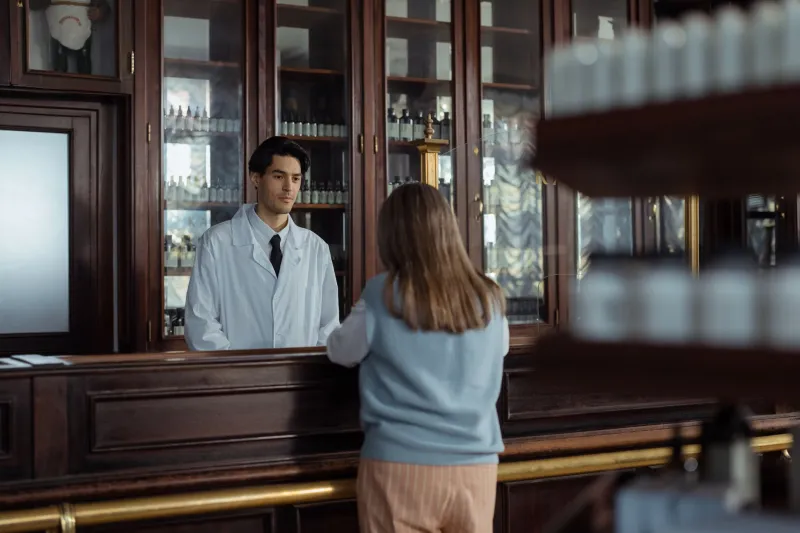
The nöbetçi eczane model operates on a municipal rotation. Each district's pharmacies take turns staffing a fully operational location through the night, on weekends, and during public holidays. The schedule is publicly posted, coordinated by provincial pharmacy chambers, and updated continuously. Residents know that finding clinical guidance is never more than a short trip or a phone call away.
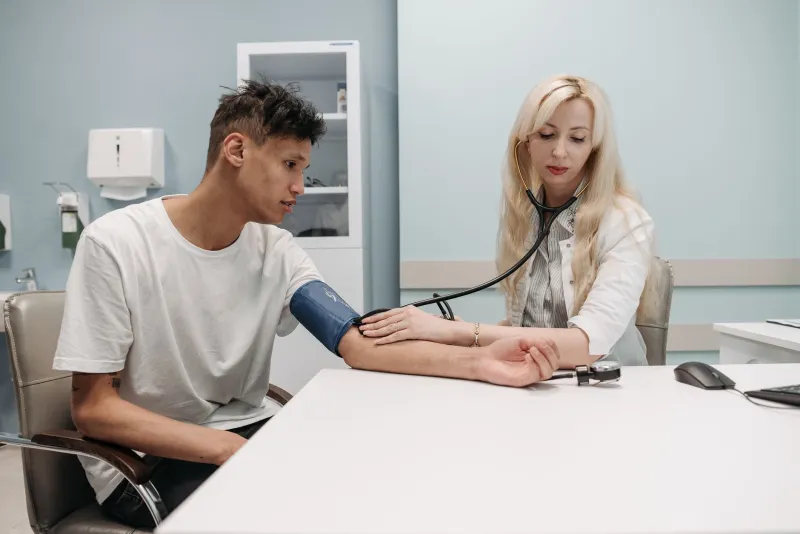
This is not merely a convenience feature. It is a triage infrastructure. Istanbul's duty pharmacists are authorized—and culturally expected—to assess symptoms, recommend appropriate over-the-counter treatments, identify warning signs that require escalation to a physician, and dispense a meaningful range of medications that would require a prescription in the United States. They do this for free, as a consultation, without appointment or copay.
The result is a first-response layer that catches problems at the moment they are still manageable.
Three Scenarios Where Early Access Changed the Outcome
Consider a middle-aged traveler who develops a skin infection on a Friday evening in Beyoğlu. In an American city, that person faces a closed dermatologist's office, an urgent care that may or may not have Saturday hours, and an emergency room as the last resort. By the time treatment begins, the infection may have progressed. In Istanbul, that same traveler walks to the nöbetçi eczane, describes the presentation to a pharmacist who examines it directly, and leaves with an appropriate topical or oral treatment within the hour.
Or consider a child with a high fever at 2 AM. An American parent in that situation either endures the night hoping it breaks or drives to an emergency department—an experience that costs hundreds of dollars, takes hours, and exposes a sick child to a crowded waiting room. An Istanbul parent walks to the duty pharmacy. The pharmacist assesses the child, confirms the fever is not accompanied by signs of serious illness, recommends a pediatric antipyretic at the correct weight-adjusted dose, and sends the family home with clear instructions on when to seek further care.
A third scenario involves medication continuity. An American expat with a chronic condition runs out of a maintenance medication over a long holiday weekend. In the US, this situation frequently ends in an emergency room visit simply to obtain a bridge prescription. In Istanbul, the duty pharmacist can often dispense a short supply of the medication and coordinate with a physician if documentation is needed. The crisis is averted before it requires emergency infrastructure.
Why America Has Not Adopted This Model
The barriers are not primarily clinical. American pharmacists are, by training, entirely capable of performing the triage functions their Istanbul counterparts perform daily. The barriers are structural, regulatory, and economic.
First, scope of practice laws in the United States vary by state and are shaped heavily by physician and insurance lobbying. Expanding pharmacist authority to consult and dispense without a physician's involvement threatens revenue streams that existing stakeholders have strong incentives to protect.
Second, the American pharmacy market is dominated by retail chains whose business model is not oriented toward after-hours community service. The nöbetçi system works in part because it is a civic obligation distributed across independent and chain pharmacies alike, mandated and coordinated by a public regulatory body. There is no American equivalent of that coordination mechanism.
Third, liability culture in the United States creates a chilling effect on clinical judgment at every level. A pharmacist who recommends a treatment that does not resolve a patient's problem faces exposure that their Turkish counterpart does not. This pushes American pharmacists toward conservative, referral-heavy behavior even when they possess the knowledge to act.
Finally, the American emergency room functions as a profit center in a way that Istanbul's emergency infrastructure does not. There is no systemic financial incentive to keep patients out of emergency departments. The nöbetçi eczane system, by contrast, operates within a healthcare environment where diverting non-emergency cases away from hospitals is a genuine institutional priority.
The Cost Argument America Keeps Ignoring
American emergency departments see tens of millions of visits annually that clinicians themselves classify as non-urgent. The average cost of an emergency room visit in the United States exceeds $1,500. A meaningful percentage of those visits involve conditions that a well-resourced, after-hours pharmacist could have addressed at the point of first symptoms.
The aggregate savings from a functional first-response pharmacy layer would be substantial. Studies of pharmacist-led triage programs in Canada and the United Kingdom have documented reductions in emergency department utilization ranging from 15 to 30 percent for minor ailment categories. Turkey's system has been operating long enough that its preventive effects are embedded in the baseline—they are difficult to measure precisely because the emergencies that did not happen leave no record.
What American Travelers Learn by Experiencing It
Americans who spend time in Istanbul and interact with the nöbetçi eczane system frequently report a shift in how they think about healthcare access. The experience of resolving a health concern quickly, inexpensively, and without bureaucratic friction recalibrates expectations. Many return home frustrated by a system that seems designed to make minor problems worse before it allows them to be addressed.
That frustration is not merely anecdotal. It reflects a genuine structural deficiency. Istanbul's duty pharmacy model is not a boutique innovation or a cultural curiosity. It is a rational, cost-effective approach to distributing clinical expertise across time and geography. The fact that the United States has not adopted a comparable framework is a policy choice, not an inevitability—and the patients who bear the consequences of that choice deserve to understand what they are missing.