Nöbetçi Eczane vs. Telemedicine at Midnight: A Scenario-by-Scenario Breakdown for Sick Americans in Istanbul

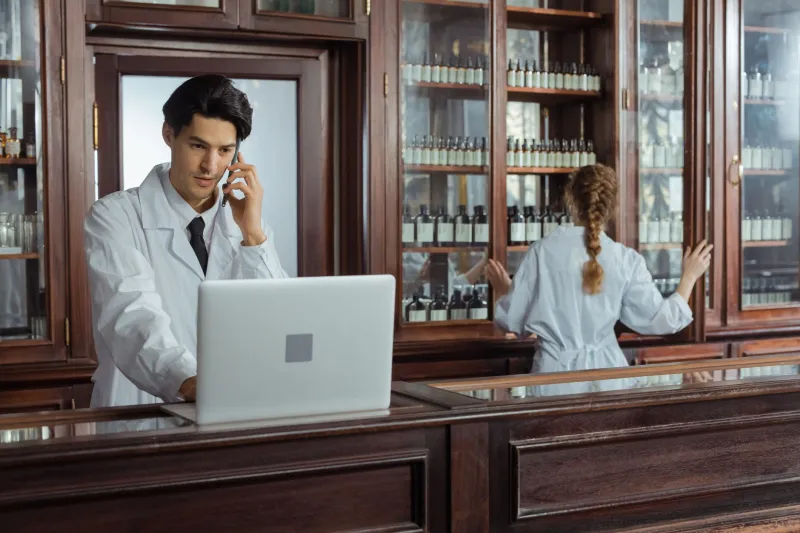
Photo: pharmacist consulting patient at night pharmacy counter, via img.freepik.com
You are in your Beyoğlu apartment at 11:47 PM. Something is wrong. The question—whether to pull on your shoes and walk three minutes to the illuminated nöbetçi eczane sign you spotted earlier, or to open Teladoc and join a virtual queue with a US physician—is not trivial. It has real consequences for how quickly you feel better, how much you spend, and whether you end up in an emergency room by morning.
This is a practical comparison, not a theoretical one. The scenarios below reflect the health situations that American travelers and expats in Istanbul most commonly encounter after hours. The analysis is built around measurable factors: wait time, diagnostic capability, language access, prescription authority, and total cost.
The Framework: What Each Option Actually Offers
Before examining specific scenarios, it is worth establishing what each option can and cannot do.
An Istanbul nöbetçi eczane pharmacist is a licensed healthcare professional—in Turkey, pharmacy education requires five years of university training. Duty pharmacists can assess symptoms, recommend OTC treatments, dispense a range of medications that require a prescription in the US, and refer patients to emergency care when appropriate. They are physically present, can observe your appearance, and can conduct a basic examination of visible symptoms. They cannot, however, prescribe controlled substances, order laboratory tests, or access your US medical history.
A US telemedicine physician is a licensed MD or DO who can review your medical history, prescribe medications, and order tests through your existing US provider network. They are operating from a different time zone—Istanbul is seven to ten hours ahead of most US time zones—which means a midnight consultation in Istanbul corresponds to mid-afternoon or early evening in the US, potentially offering reasonable physician availability. They cannot physically examine you, cannot prescribe Turkish-market medications, and cannot send a prescription to an Istanbul pharmacy.
Scenario One: UTI Symptoms at Midnight
This is among the most common after-hours health situations American women report encountering while traveling.
Telemedicine path: Opening a telemedicine app at midnight Istanbul time means it is 2–5 PM on the US East or West Coast. Physician availability is generally reasonable. Estimated wait time: 15–45 minutes depending on platform and demand. The physician can diagnose based on reported symptoms and prescribe a US antibiotic. Problem: that prescription goes to a US pharmacy. You are in Istanbul. The physician may be willing to recommend an OTC urinary analgesic like phenazopyridine, but the antibiotic—the treatment that actually resolves the infection—cannot be dispensed to you in Turkey through this channel. Total resolution: incomplete.
Nöbetçi eczane path: Walk-in, no wait, immediate symptom assessment. Turkish pharmacists are well-acquainted with this presentation. A standard course of an appropriate antibiotic—fosfomycin is commonly dispensed OTC for uncomplicated UTIs in Turkey—can be provided on the spot. The pharmacist will ask about allergies, confirm the symptom profile, and dispense with dosing instructions. Estimated time from arrival to treatment in hand: under 10 minutes. Cost: typically under $10 USD at current exchange rates. Total resolution: complete.
Verdict: Duty pharmacy wins decisively. The telemedicine option produces a prescription you cannot fill.
Scenario Two: Suspected Food Poisoning
You ate something in Karaköy six hours ago. You are now experiencing nausea, vomiting, and significant gastrointestinal distress. You are not dehydrated enough to require IV fluids, but you are miserable and need intervention.
Telemedicine path: A US physician can confirm that your symptom profile is consistent with food poisoning rather than something more serious, which has genuine diagnostic value. They can recommend OTC treatments—antiemetics, electrolyte replacement—but cannot prescribe antiemetics to an Istanbul pharmacy. Wait time varies. If your symptoms suggest a bacterial infection rather than viral gastroenteritis, the prescription problem resurfaces.
Nöbetçi eczane path: Turkish pharmacists regularly manage this presentation. Antiemetic medications available OTC in Turkey—metoclopramide, for instance—are prescription-only in the US. Oral rehydration solutions are stocked at every eczane. The pharmacist can assess whether your presentation warrants emergency care. Physical presence matters here: a pharmacist who can observe your color, hydration level, and general condition is better positioned to triage than a physician viewing you through a phone camera in poor lighting.
Verdict: Duty pharmacy again holds the practical advantage, particularly for immediate symptom relief. Telemedicine adds value only if you need reassurance about whether to seek emergency care—a judgment the pharmacist can also make.
Scenario Three: Mild Allergic Reaction
You have developed hives and mild swelling after a meal. No throat tightening, no respiratory distress—this does not appear to be anaphylaxis—but the reaction is uncomfortable and you are appropriately concerned.
Telemedicine path: A physician can confirm this is not a situation requiring epinephrine and recommend an antihistamine. Wait time: 20–40 minutes. They can prescribe a corticosteroid if the reaction warrants it, but again, that prescription cannot reach an Istanbul pharmacy.
Nöbetçi eczane path: Antihistamines are immediately available. The pharmacist can assess whether the reaction's scope warrants referral to an emergency room. Corticosteroids for short-course use in allergic reactions are dispensable in Turkey without a prescription in many formulations. Response time: immediate.
Verdict: Duty pharmacy is faster and more actionable. The telemedicine consultation may provide peace of mind but cannot accelerate treatment delivery.
The Cost Analysis
US telemedicine visits typically cost $50–$75 after insurance, or $75–$150 without. This is before any prescription cost. Istanbul nöbetçi eczane consultations are free—pharmacist advice is not billed separately—and medication costs at current exchange rates are a fraction of US equivalents.
When Telemedicine Wins
Telemedicine holds a genuine advantage in two situations: when you need a diagnosis documented in your US medical record, and when you are managing a condition that requires coordination with your existing US prescriber. For continuity of care across the Atlantic, a US physician is irreplaceable. For acute, immediate health needs in Istanbul after hours, the nöbetçi eczane pharmacist is, in most scenarios, the faster, cheaper, and more actionable resource.