Your Prescription in Translation: A Practical Framework for Matching American Medications to Their Turkish Counterparts
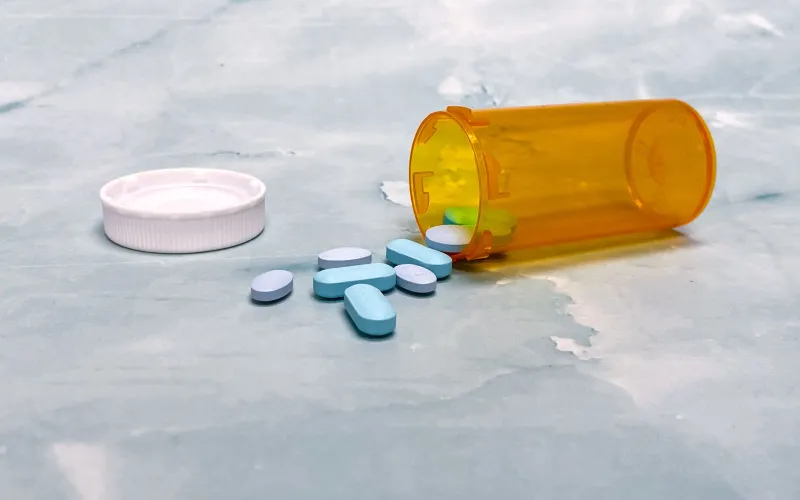
For Americans who travel with a carry-on full of carefully counted medication, the scenario arrives without warning: a delayed flight means an extra night in Istanbul, a bag goes missing, or the trip simply extends beyond what was originally planned. Suddenly, a routine prescription that was never meant to be a logistical problem becomes exactly that.
Istanbul's nöbetçi eczane network operates around the clock, and duty pharmacists here are accustomed to assisting foreign visitors with medication continuity. But that assistance works best when the visitor arrives with some preparation—and worst when they arrive with nothing but a pill bottle and a hopeful expression.
This guide is designed to bridge that gap.
Why American Drug Names Don't Travel Well
The United States pharmaceutical market operates on brand names that are often entirely unrecognizable outside of North America. Lipitor, Zoloft, Ambien, Nexium—these are proprietary names registered by specific manufacturers for specific markets. They carry no legal or commercial meaning in Turkey.
What does travel across borders is the International Nonproprietary Name, or INN: the generic chemical name that identifies the active pharmaceutical ingredient regardless of country. Atorvastatin is atorvastatin whether it is sold as Lipitor in the US or Sortis in Germany. Sertraline is sertraline whether it appears on an American bottle as Zoloft or on a Turkish one as Lustral.
This is the single most important concept for any American preparing to manage their medications in Istanbul. Before departure, every person taking a prescription medication should know the INN—the generic name—of each drug in their regimen. This information appears on every American prescription label and can be confirmed with any US pharmacist in under two minutes.
Building Your Medication Reference Before You Leave
Preparation begins at home, not at the pharmacy counter in Istanbul. The following steps will significantly improve your ability to obtain medication continuity through a nöbetçi eczane.
Step one: Document every medication by its generic name. Write down not just the name but the exact dosage, the formulation (tablet, capsule, extended-release, liquid), and the frequency. Extended-release formulations deserve particular attention—a standard-release version of the same drug is not pharmacologically equivalent, and substituting one for the other without medical guidance can have meaningful clinical consequences.
Step two: Research Turkish brand names in advance. The TEB (Turkish Pharmacists' Association) maintains searchable databases, and international drug databases such as the WHO's INN list can help you identify which Turkish-marketed products share your active ingredient. Common examples include: omeprazole, sold in the US as Prilosec, is available in Turkey as Losec or in generic form; metformin, sold as Glucophage in the US, is available in Turkey under the same brand name and in several generics; levothyroxine, sold as Synthroid in the US, is available in Turkey as Levotiron or Tefor.
Step three: Photograph your original packaging. The label, the pill itself, and any patient information insert should all be documented. A duty pharmacist who can see the original product has significantly more to work with than one relying solely on a verbal description.
What to Expect at the Nöbetçi Eczane Counter
Turkish duty pharmacists are trained to assist with medication identification and, within certain regulatory boundaries, to provide continuity supplies for chronic condition management. However, the process is not automatic, and several variables affect what a pharmacist can and cannot do.
Many medications that require prescriptions in the United States are available over the counter in Turkey, or are dispensed by pharmacists with clinical discretion. Blood pressure medications, certain antibiotics, antifungals, and some psychiatric medications fall into categories where Turkish pharmacy practice allows greater flexibility than American law permits.
However, controlled substances present a significant complication. Opioids, benzodiazepines, stimulants used for ADHD management, and other scheduled drugs are tightly regulated under Turkish law, and a duty pharmacist will not be able to provide these without a Turkish physician's prescription. If your regimen includes any controlled substance, planning for an interruption should involve your physician before departure—not a pharmacy counter at midnight.
Dosage Equivalency: Where Caution Is Essential
Even when the active ingredient is identical, dosage conventions can differ between markets. Certain antihypertensives are commonly available in Turkey at dosage strengths that differ from standard US formulations. Some antihistamines are packaged at different milligram levels. Thyroid medications, which require precise dosing, may be available in a slightly different range of strengths.
For most medications, small dosage discrepancies are manageable with pharmacist guidance—a duty pharmacist can advise on how to approximate a dose using available tablet strengths. But for medications with narrow therapeutic windows—anticoagulants like warfarin, anticonvulsants, thyroid hormones, and lithium among them—any dosage variation requires physician oversight. This is a firm boundary, and any pharmacist who suggests otherwise should be treated with skepticism.
Red Flags That Mean You Need a Doctor, Not a Pharmacy
Duty pharmacists in Istanbul are skilled at medication continuity assistance, but there are circumstances where their involvement should be a bridge to medical consultation, not a substitute for it.
Seek physician evaluation rather than pharmacy-only assistance if: your medication is a controlled substance; your condition requires regular laboratory monitoring (such as INR testing for warfarin, or TSH testing for thyroid medication); you have experienced any change in your symptoms or condition since your last physician contact; or you are uncertain whether a Turkish equivalent shares the same inactive ingredients, which can matter significantly for individuals with allergies or sensitivities to excipients.
Most nöbetçi eczane pharmacists will themselves recommend physician consultation in these situations. If a duty pharmacist expresses hesitation or asks clarifying questions about your medical history before proceeding, that is the system working as intended—not an obstacle to be circumvented.
Arriving Prepared Changes Everything
The difference between a stressful medication interruption and a smoothly managed one often comes down to the quality of information a traveler carries. A duty pharmacist working from a clear generic name, an accurate dosage, and a photograph of the original packaging can accomplish a great deal. The same pharmacist working from "I take a little white pill for my blood pressure" is working largely in the dark.
Istanbul's nöbetçi eczane network is a genuinely robust resource for Americans managing health conditions abroad. Treating it as such—by arriving informed and prepared—is the most effective way to use it.