One Laminated Card, Zero Panic: How to Build an Istanbul Emergency Pharmacy Card Before You Fly
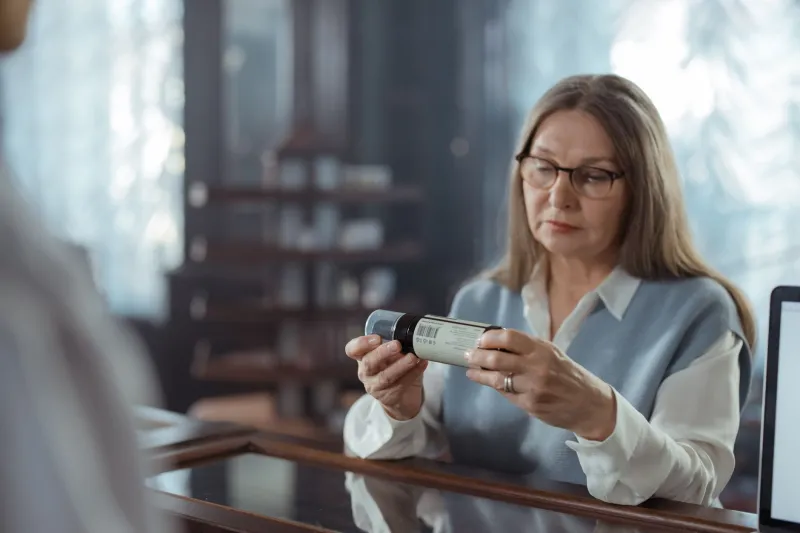
Picture this: it is 2:47 in the morning, somewhere in Beyoğlu. Your stomach has staged a full revolt, your Turkish vocabulary extends to merhaba and teşekkür ederim, and the nöbetçi eczane — Istanbul's rotating 24-hour duty pharmacy — is lit up across the street like a beacon. You walk in. The pharmacist looks at you expectantly. And your mind goes completely blank.
This scenario plays out dozens of times every week among American visitors to Istanbul. The city's duty pharmacy network is genuinely one of the most accessible after-hours healthcare systems in the world, but it requires one thing from you that no travel app can provide in the moment: a clear, organized summary of who you are medically and what you need.
That is precisely what an Istanbul Emergency Pharmacy Card does. It is not a medical alert bracelet or a hospital intake form. It is a compact, laminated reference sheet — small enough to sit behind your credit card — that gives a Turkish pharmacist everything they need to help you efficiently, accurately, and without a frustrating game of charades.
Here is how to build one that actually works.
Why a Physical Card Outperforms Your Phone Every Time
Before getting into the specifics, it is worth addressing the obvious objection: Can't I just use Google Translate on my phone?
You can, and many travelers do. But phones run out of battery. Screens are hard to read under fluorescent pharmacy lighting when you are feverish or disoriented. Translation apps occasionally mangle medical terminology in ways that create genuine confusion. And perhaps most importantly, handing a pharmacist a physical card signals preparation and seriousness — it immediately communicates that you are an informed patient, not a panicked tourist guessing at symptoms.
Pharmacists at Istanbul's nöbetçi eczaneler are highly trained professionals. Give them clean, readable information and they will work with you swiftly. Make them decode a spinning phone screen at midnight and the interaction becomes harder for everyone.
Section One: Your Identification Block
The top portion of your card should contain your core identifying information. Keep it brief and formatted in two columns — English on the left, Turkish on the right.
- Full name (no translation needed, but include phonetic pronunciation if your name is unusual)
- Date of birth — use the DD/MM/YYYY format standard in Turkey, not the American MM/DD/YYYY format
- Blood type — written as your type followed by kan grubu (e.g., A pozitif kan grubu)
- Known allergies — list the substance, then write alerjim var (I have an allergy to this)
For allergies specifically, consider using the universal red circle-slash symbol next to each item. Visual symbols cross language barriers instantly and give the pharmacist an immediate visual cue before they even read the text.
Section Two: Chronic Conditions and Active Medications
This is the most critical portion of the card, and the area where American travelers most often undersell themselves. If you manage a chronic condition — diabetes, hypertension, asthma, thyroid disorders, anxiety — write it down. Turkish pharmacists are equipped to cross-reference your condition against any medication they might dispense, but only if they know about it.
For each condition, provide:
- The English name of the condition
- The Turkish equivalent (a few examples: diyabet for diabetes, hipertansiyon for hypertension, astım for asthma, tiroid for thyroid disorders)
- A phonetic pronunciation guide in parentheses if needed
For each active medication, list:
- The generic name of the drug, not just the brand name — Turkish pharmacies stock many of the same molecules under different trade names
- The dosage in milligrams
- The frequency (once daily, twice daily, etc.) — günde bir kez means once daily; günde iki kez means twice daily
- A small pill icon or capsule drawing next to each entry helps pharmacists scan quickly
If you are on a medication that has a well-known Turkish equivalent, note that as well. Several American travelers have been surprised to discover that medications requiring a prescription back home are available over the counter at Istanbul duty pharmacies — your pharmacist can advise, but only if they know what you are currently taking.
Section Three: Your Symptom Reference Grid
Below your medication list, include a small grid of common symptoms with their Turkish equivalents. You will not use all of them, but having them pre-printed means you can simply point rather than struggle to articulate.
Some of the most useful entries:
| English | Turkish | Phonetic |
|---|---|---|
| Stomach pain | Mide ağrısı | Mee-deh ah-ruh-suh |
| Fever | Ateş | Ah-tesh |
| Headache | Baş ağrısı | Bash ah-ruh-suh |
| Nausea | Bulantı | Boo-lan-tuh |
| Diarrhea | İshal | Ees-hal |
| Rash | Döküntü | Doh-koon-too |
| Chest pain | Göğüs ağrısı | Goh-us ah-ruh-suh |
| Dizziness | Baş dönmesi | Bash don-meh-see |
Point to the relevant row. The pharmacist will take it from there.
Section Four: Neighborhood Fallback Zones
On the reverse side of your card, list two or three Istanbul neighborhoods where nöbetçi eczaneler are reliably accessible at any hour. Your choices will depend on where you are staying, but strong fallback zones for most American visitors include Beyoğlu (particularly around İstiklal Caddesi), Kadıköy on the Asian side, Beşiktaş, and Şişli. Write the neighborhood name, note that it is a nöbetçi eczane bölgesi (duty pharmacy zone), and if possible include the name of a nearby landmark so a taxi driver can get you close.
Also note the Turkish phrase En yakın nöbetçi eczane nerede? — it means Where is the nearest duty pharmacy? and is worth having written out phonetically: En yah-kuhn noh-bet-chee ej-zah-neh neh-reh-deh?
The Finishing Details: Format and Lamination
Design your card to fit a standard wallet slot — roughly 3.5 by 2 inches, or the size of a credit card. Use a font no smaller than 8 points. Print on both sides. Have it laminated at any office supply store before departure; the process takes under five minutes and costs almost nothing.
Bring two copies: one for your wallet and one tucked into your travel document folder. If you are traveling with a companion, make them a card as well.
A Few Minutes Now, Hours Saved Later
The nöbetçi eczane system in Istanbul is built on the premise that healthcare access should not stop when the sun goes down. Istanbul's duty pharmacists are capable, multilingual more often than not, and genuinely accustomed to helping international visitors. What they cannot do is read your mind.
Your Istanbul Emergency Pharmacy Card closes that gap. It converts a potentially chaotic midnight encounter into a clean, professional exchange — one where you walk out with what you need rather than a handful of apologetic shrugs.
Spend twenty minutes before your flight building this card. Laminate it. Slide it into your wallet next to your passport copy. Then travel knowing that whatever Istanbul's nights throw at you, you have already done the hard work.