Beyond the Drugstore Aisle: How Istanbul's Pharmacy System Redefines What a Pharmacist Can Do for You
Beyond the Drugstore Aisle: How Istanbul's Pharmacy System Redefines What a Pharmacist Can Do for You
Walk into a Walgreens or CVS in any American city and you will encounter a recognizable scene: aisles of snack foods, cosmetics, and seasonal merchandise flanking a pharmacy counter tucked in the back, staffed by professionals who are, more often than not, separated from customers by a waist-high barrier and a queue of insurance-related paperwork. The pharmacist is there, certainly, but the architecture of the American drugstore quietly signals that their role is transactional — fill the prescription, answer a narrow set of questions, send you on your way.
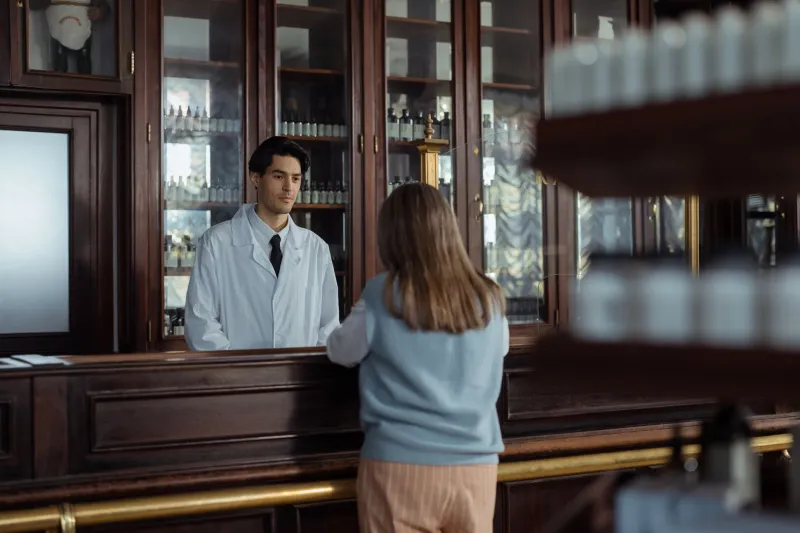
Step into an Istanbul eczane — particularly one operating as a nöbetçi, or duty pharmacy, after hours — and the experience is categorically different. The pharmacist stands at the front. There is no candy aisle. The conversation begins the moment you walk through the door.
For American travelers and long-term expats, this contrast is not merely aesthetic. It reflects a philosophical divergence in how two healthcare systems conceptualize the pharmacist's role, and that divergence has real, practical consequences for anyone seeking medical assistance in Istanbul.
The Green Crescent and What It Actually Stands For
The green crescent — yeşilay in Turkish — is the symbol adorning virtually every pharmacy in Turkey, and it carries meaning beyond simple branding. Turkish pharmaceutical culture positions the eczane as a community health anchor, not a retail outlet that happens to dispense medications. Pharmacists in Turkey complete a five-year university program that emphasizes clinical consultation, patient assessment, and therapeutic decision-making at a depth that many American pharmacists would recognize as comparable to their own doctoral training.
What differs is how that training is deployed in daily practice. Turkish pharmacists are culturally and legally empowered to engage patients in ways that would surprise most Americans. A customer describing symptoms of a sinus infection, for instance, is not simply handed an antihistamine and pointed toward the exit. The pharmacist may ask a structured series of diagnostic questions, assess the likelihood of bacterial versus viral origin, and — crucially — dispense antibiotics directly when clinical judgment supports it.
This is not a gray area in Turkey. It is standard practice.
What Americans Find Surprisingly Accessible
The list of medications available over the counter in Istanbul that require a prescription in the United States is extensive enough to be genuinely startling for first-time visitors. Certain antibiotics, antifungals, corticosteroids, and even some cardiovascular medications can be obtained at an Istanbul pharmacy following a brief consultation, without a physician's written order.
This does not mean Turkish pharmacies operate without standards. On the contrary, the pharmacist's consultation is the standard. The difference is that Turkey has placed clinical gatekeeping authority with the pharmacist at the point of dispensing, rather than requiring a separate physician visit for conditions that experienced pharmaceutical professionals are well-qualified to assess.
For American travelers managing chronic conditions — or those who have simply lost a prescription while abroad — this system offers a practical safety net that the American model does not. An expat who runs out of a maintenance medication mid-trip is not necessarily facing a crisis in Istanbul. A conversation with a knowledgeable eczane pharmacist, combined with the medication's original packaging or a description of the drug, frequently resolves the situation within minutes.
Injections, Wound Care, and Clinical Services on Site
Perhaps the most striking capability of Istanbul pharmacies, from an American perspective, is the routine provision of clinical services that in the United States would require a physician's office, an urgent care clinic, or a hospital visit.
Many Istanbul eczanes — and virtually all nöbetçi pharmacies during their duty hours — are equipped and staffed to administer intramuscular and intravenous injections. A patient who has been prescribed an injectable medication by a Turkish physician, or who is traveling with a documented injectable treatment regimen, can often have the injection administered directly at the pharmacy. This service is offered as a routine courtesy, not an exceptional accommodation.
Wound assessment, blood pressure monitoring, blood glucose testing, and pregnancy confirmation are similarly common pharmacy-level services in Istanbul. The eczane, in this respect, functions as a first-contact clinical environment — a role that primary care physicians and urgent care operators in the United States have claimed almost exclusively for themselves.
Why the American Model Diverged
Understanding the gap between these two systems requires a brief look at how American pharmacy regulation evolved. The United States has historically maintained a strict separation between prescribing authority and dispensing authority, a division rooted in early 20th-century medical licensing reforms that sought to professionalize and compartmentalize healthcare roles. This framework protected patients from unqualified practitioners but also, over time, created a system in which pharmacists — regardless of their clinical expertise — are structurally limited in what they can initiate without a physician's order.
The commercial evolution of American pharmacy further complicated matters. As chain drugstores grew into billion-dollar retail enterprises, the pharmacy counter became one revenue center among many, and the pharmacist's public-facing identity became increasingly associated with prescription fulfillment rather than clinical consultation.
Turkey's pharmacy sector, regulated by the Turkish Pharmacists' Association and the Ministry of Health, developed along a different axis — one that preserved and in some respects expanded the pharmacist's clinical authority, particularly in communities where physician access is limited.
What This Means for Health-Conscious American Travelers
The practical implications for Americans visiting or living in Istanbul are significant. Health-conscious travelers who assume that all Western-adjacent pharmacy systems operate under roughly the same rules as those at home are likely to under-utilize one of Istanbul's most accessible healthcare resources.
An American with a moderate skin infection who spends two hours waiting in a foreign emergency room is not necessarily navigating the system optimally. A traveler experiencing a urinary tract infection who assumes a doctor's visit is mandatory before any treatment is available may be suffering unnecessarily. In Istanbul, these situations are frequently resolved at the eczane counter — quickly, affordably, and with genuine clinical engagement.
This is not a suggestion to bypass medical care when it is genuinely needed. It is, rather, an encouragement to recalibrate expectations. Istanbul's pharmacists are not clerks behind a counter. They are, in many practical respects, the first line of the city's healthcare system — and for American visitors, learning to engage with them as such may be one of the most useful pieces of travel health knowledge available.
At İstanbul Nöbetçi Eczane, our directory exists precisely to help visitors and residents locate the duty pharmacies serving their district at any hour. Knowing where the nearest nöbetçi eczane is operating tonight is the first step. Understanding what that pharmacist is genuinely equipped to help you with is the second — and arguably more important — one.